Handheld experiences
Reusable foundations for displays, controls, connectivity, power-aware behavior, and the interactions that make a device feel complete.
 PY BLOCK
Our mission
Create an open, end-to-end, Python-based software platform for handheld devices built on popular, affordable silicon.
See the complete stack ↓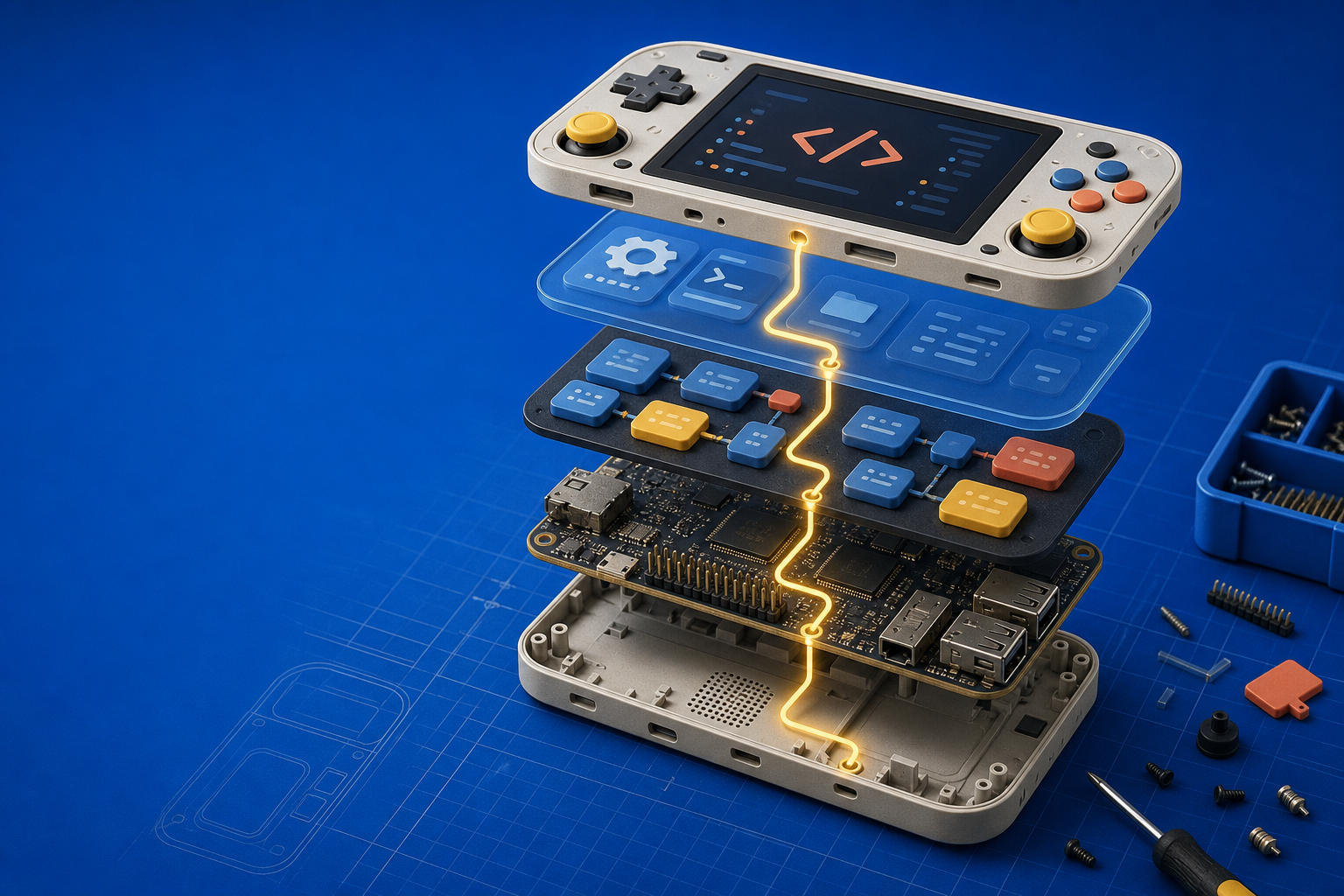
Why this platform
Today, building a useful handheld product often means stitching together closed device software, specialist embedded tools, and custom hardware. Py Block aims to replace that fragmented path with one understandable Python platform—from an idea on screen to code running on a real device.
End to end
Reusable foundations for displays, controls, connectivity, power-aware behavior, and the interactions that make a device feel complete.
Common APIs and building blocks so developers can focus on what their handheld does, not repeatedly rebuild its infrastructure.
A familiar, productive language connects experimentation, application logic, tools, automation, and device development.
Support for widely available processors and boards keeps prototyping practical, sourcing flexible, and the path to real hardware accessible.
Open
The platform should be understandable and adaptable, with open interfaces that invite contribution instead of locking builders into one device.
Practical
Popular silicon lowers cost and risk. A platform matters more when students, independent developers, and product teams can actually obtain its hardware.
Complete
End-to-end ownership lets the software, tools, runtime, and device behavior improve together as one coherent system.
Explore the implementation
See the technology →